

VP&S Enacts New Vision for PhD Student Education
Beginning this fall, new students starting graduate school at Columbia University Vagelos College of Physicians and Surgeons will be embarking on a profoundly different educational program than their predecessors and peers at other schools.
Spurred by a $175 million gift in 2023 from Roy and Diana Vagelos, the Vagelos Institute’s Biomedical Research Education (VIBRE) PhD Programs are creating a new academic model to give PhD students greater freedom and encourage and accelerate the intellectual risk-taking needed to make historic advances in health science research.
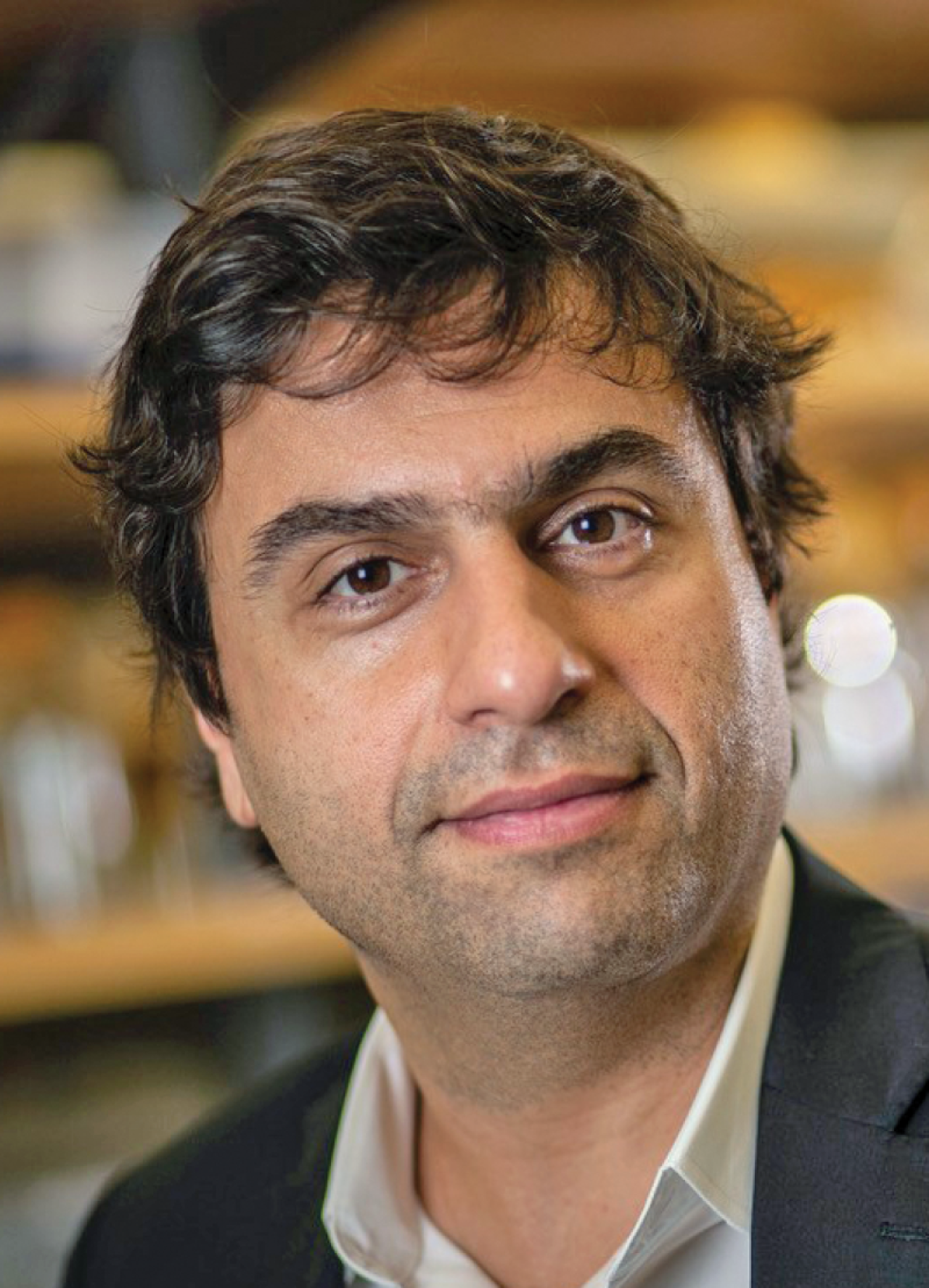
“Graduate programs in the life sciences have evolved over time by layering new initiatives on top of an existing structure. It is rare to have the opportunity to step back, view the system in its entirety, and thoughtfully reconsider how graduate education should be designed and structured for today,” says Hashim Al-Hashimi, associate dean of biomedical graduate education at VP&S, who spearheaded the implementation of changes envisioned by the graduate school task forces.
We spoke with Al-Hashimi about the need for change and how graduate students and science will benefit.
Why change the way we educate and train PhD students to become scientists?
One of the most powerful parts of earning a PhD is discovering what truly sparks your curiosity in science and learning how to pursue answers to the questions that keep you up at night. Finding that intellectual passion is essential not only for a fulfilling career in science, but also for discovery itself. Many of the most important breakthroughs come from scientists who are deeply driven by questions they cannot let go of.
But over time, the PhD experience has changed. As the scientific enterprise has grown more complex and resource-intensive, both faculty and trainees now operate within a highly structured environment shaped by large collaborative projects, funding cycles, and rapidly evolving technologies. These forces have enabled extraordinary advances in science, but they can also leave less room for the kind of open-ended intellectual exploration that helps young scientists discover what truly excites them, and ultimately pursue the kinds of questions that lead to transformative discoveries.
At the same time, science itself is changing in ways that create unprecedented opportunities. Tools and ideas that once belonged to specialized fields are now accessible to almost everyone. By integrating insights across disciplines, scientists can now ask questions about living systems that were previously impossible to pose.
We need to reimagine graduate training to meet this new reality. This means creating environments that preserve the freedom to pursue big, transformative ideas while equipping students with the interdisciplinary tools needed to tackle them. When students are encouraged to think boldly and trained to move fluidly across disciplinary boundaries, they are better prepared to confront the most important scientific challenges of our time. At the same time, this approach helps restore a core element of the PhD experience, the joy of curiosity-driven discovery that comes from pursuing questions that truly matter.
That’s the vision behind the changes we are making.
What changes are happening at VP&S to revamp the PhD student experience?
To implement this new model for graduate training, we rethought how our programs are organized. Historically, many PhD programs were closely aligned with individual departments or traditional disciplinary boundaries. While those structures created strong intellectual homes, they also made it harder for students to access opportunities across disciplines and often led to training experiences that were more siloed than we would like. With VIBRE, we built on the strengths of Columbia’s departments while creating a framework that allows students to navigate the biomedical sciences more fluidly and engage more easily with ideas and mentors across fields.
In some ways the system is more centralized. VIBRE brings together doctoral programs that were previously separate under a shared umbrella, creating a large, connected community of students and faculty. At the same time, it is deliberately decentralized. Each program and disciplinary track is guided by an interdepartmental training committee composed of faculty from across departments who oversee admissions, curriculum, and mentoring. This ensures that each track retains its intellectual identity while benefiting from an overarching structure that advances the values and goals of our Columbia community.
Another key change is the curriculum. We developed new courses that are designed to help students learn how to think critically, ask important questions, develop intuition, and connect ideas across scales, from molecules to cells to organisms and populations. Our foundational courses, Molecules to Life 1 and 2 and Bytes to Biology 1 and 2, integrate perspectives from biochemistry, physics, biology, computation, and medicine to help students develop a unified understanding of living systems. These courses expose students to a wide range of disciplines across the biomedical sciences while offering focused training in the fundamental principles and conceptual frameworks that underlie them. In doing so, they allow students to explore their interests during the first year of graduate school, helping them discover which questions and areas of science most strongly capture their curiosity.
The goal is to create a more personalized, student-driven experience, one that gives students both deep disciplinary expertise and broad cross-disciplinary exposure, empowering them to follow their curiosity and pursue transformative discoveries.
Funding is always a big issue for graduate students. Will that be changing?
One of the important changes VIBRE makes is that it removes financial constraints that historically shaped graduate training. In the traditional model, the first year of graduate school was funded through a patchwork of sources, including training grants tied to specific programs or disciplines. This made it difficult to unify the graduate student experience across PhD programs and tracks under a common underlying structure.
With our new model, the Vagelos gift funds all first-year students across all programs and tracks. That gives students much more freedom to explore and ultimately join the lab that is the best intellectual fit for them. It also allows faculty across VP&S to recruit from the full pool of students rather than from a subset tied to particular programs and tracks.
Another benefit is that it frees up training grant support to help fund students in their second year and beyond. At the same time, VIBRE is encouraging students to apply for their own fellowships and student grants. Through grant-writing workshops and other initiatives, we provide them with the guidance and skills needed to successfully compete for these opportunities, an important part of their professional development as future scientists.
Everywhere in academia, mentoring and teaching of graduate students are high on the list of student concerns. Will there be changes in this area?
Mentoring is central to the VIBRE model to ensure that every student has the support and perspective needed to thrive. We are strengthening the mentoring framework that supports each student’s development by establishing clearer expectations for faculty mentors and building broader mentoring networks around each trainee.
We want students to be supported by a network of mentors rather than relying on a single advisor. Early on, Directors of Graduate Studies help guide students through their first year as they explore labs and find the right research fit. As they progress, thesis committees will provide structured mentoring and broader scientific guidance. We are also encouraging collaborative projects that involve more than one lab, giving students additional mentors beyond their primary advisor. Finally, we are introducing structured training to help students become the best trainees they can be and to help faculty become the most effective mentors possible.

PhD students met 2009 Nobel Laureate Venki Ramakrishnan at an event co-sponsored by the Vagelos Institute for Biomedical Research Education.
At the same time, we are also placing greater emphasis on professional development. Our students pursue a wide range of career paths in science, medicine, industry, policy, entrepreneurship, and beyond, and we view career exploration and preparation as an integral part of the VIBRE mission. Through mentoring committees, program leadership, and peer communities, students receive guidance not only on their research but also on career decisions and professional growth. VIBRE is also developing structured opportunities for students to explore different career trajectories, build professional skills, and engage with alumni and leaders across sectors, helping them translate their scientific training into impact across many areas of society.
Why is this a great time to be a graduate student at VP&S?
When I look back on my own graduate experience, what shaped it most were the long conversations with fellow students in the wee hours of the morning, talking about science, the nature of the world we live in, and the bigger questions about the human condition. That special blend of community and intellectual curiosity is at the heart of great graduate training.
VP&S has long benefited from a vibrant community of students, faculty, and staff in one of the most exciting cities in the world. VIBRE builds on that foundation by bringing our community even closer together and giving students the freedom to explore across disciplines, discover their passions, leave their mark on the biomedical enterprise, and build the friendships and networks that will last throughout their careers.
I feel that people here, students, faculty, and staff, are excited about the possibilities.