Vagelos Innovation Laboratories Celebration Fetes Science, Architecture, and the Future
Columbia University Irving Medical Center celebrated the opening of the brand-new Roy and Diana Vagelos Innovation Laboratories, one of the first all-electric biomedical research labs in New York City, at an event on Nov. 12. When fully occupied in early 2027, the building will house more than 200 research personnel working at the forefront of science, from engineering our own cells to fight disease to gaining a better understanding of Alzheimer’s and dementia.
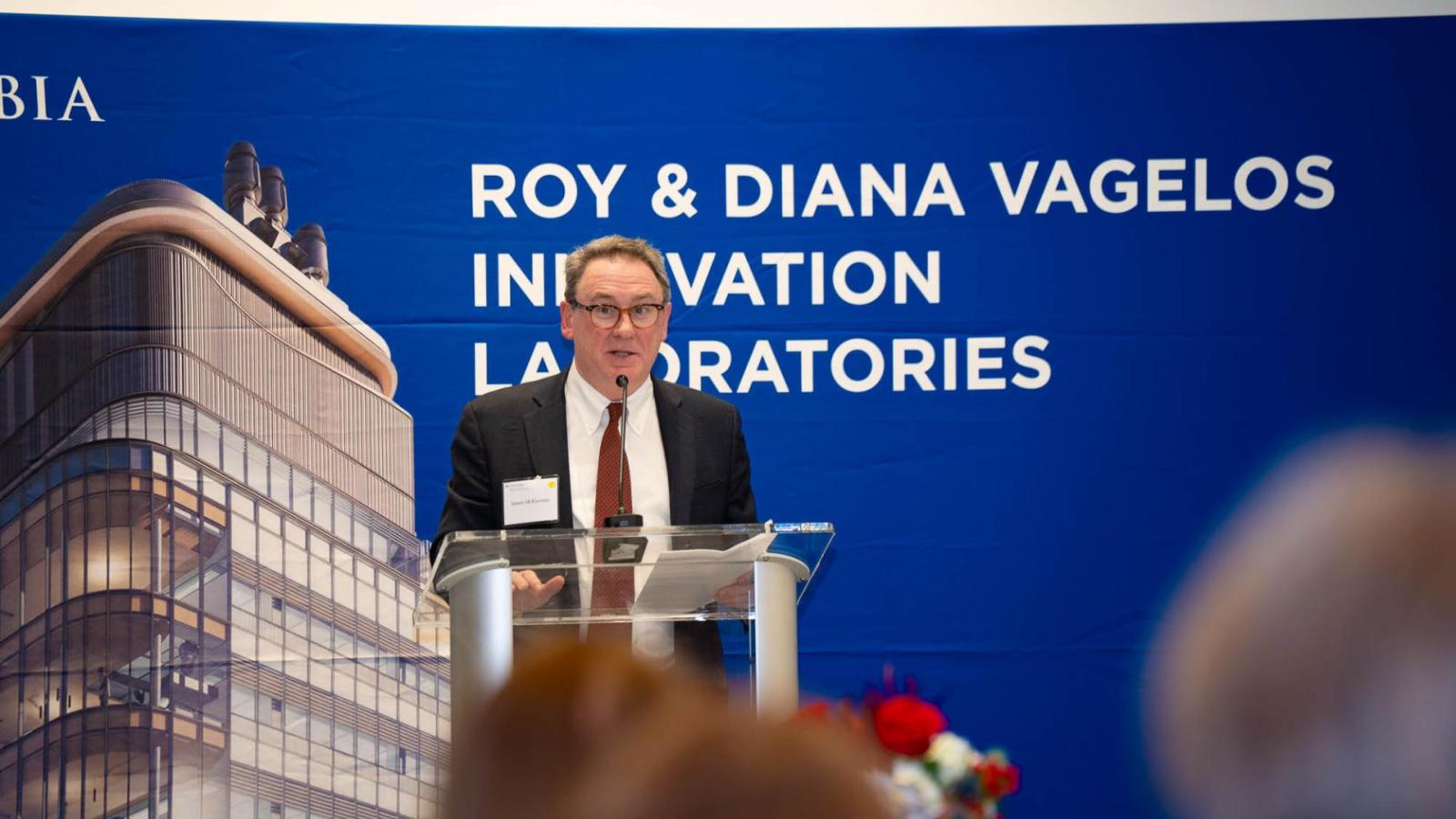
James McKiernan, interim CEO of CUIMC and interim dean of the Vagelos College of Physicians and Surgeons, welcomed everyone and shared his excitement for what the facility will mean for scientists and, ultimately, for patients.
“The combination of unwinding the human genome, launching artificial intelligence into science,and manipulating the immune system, particularly through cell engineering and redesigning the DNA of cells, all are going to converge in this building,” McKiernan said. “The research that will happen here comes at a time in medicine when we need it more than ever, and we're capable of achieving it more than ever.”
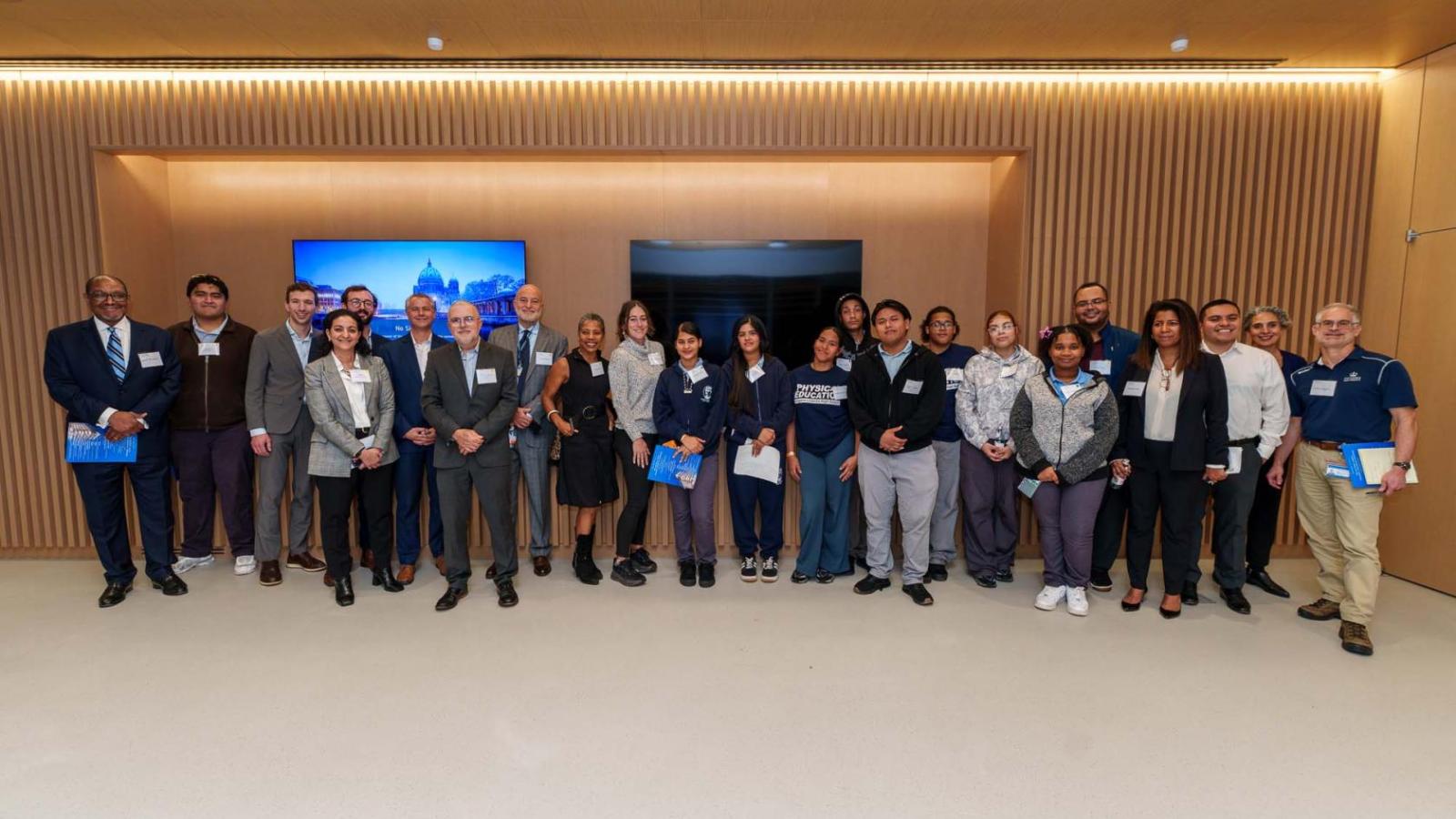
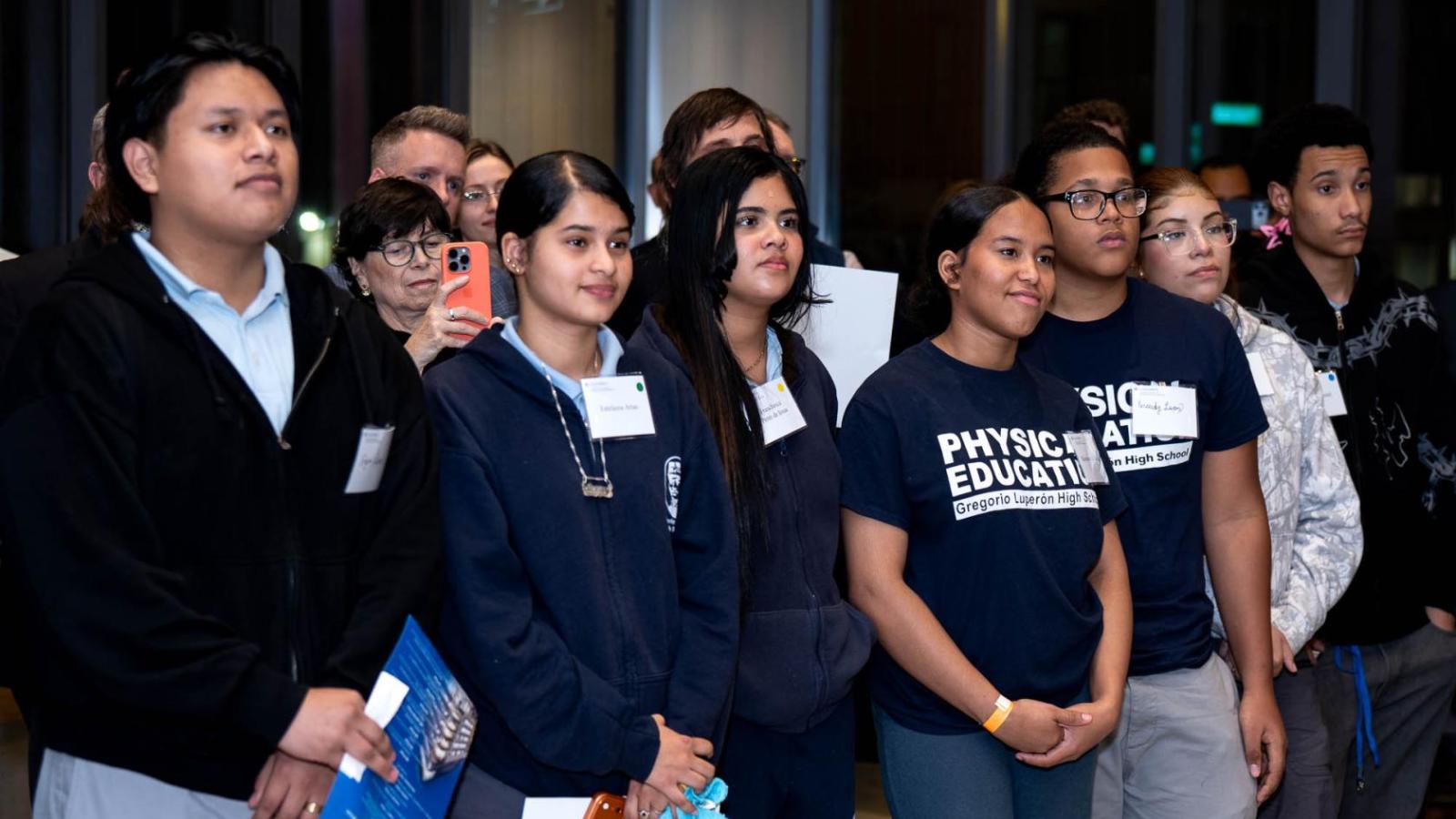
McKiernan also welcomed the event’s youngest attendees, 15 high school students from Gregorio Luperon High School for Science and Mathematics who participate in the Mentorship and Pipeline Program (MAPP to CU) of the Department of Emergency Medicine. “This facility allows us to attract young, talented minds to biomedical science. In fact, some of those young minds are here with us tonight. They are the next generation of researchers, and we hope they will choose to spend a summer with us and get started on an exciting career,” McKiernan said.
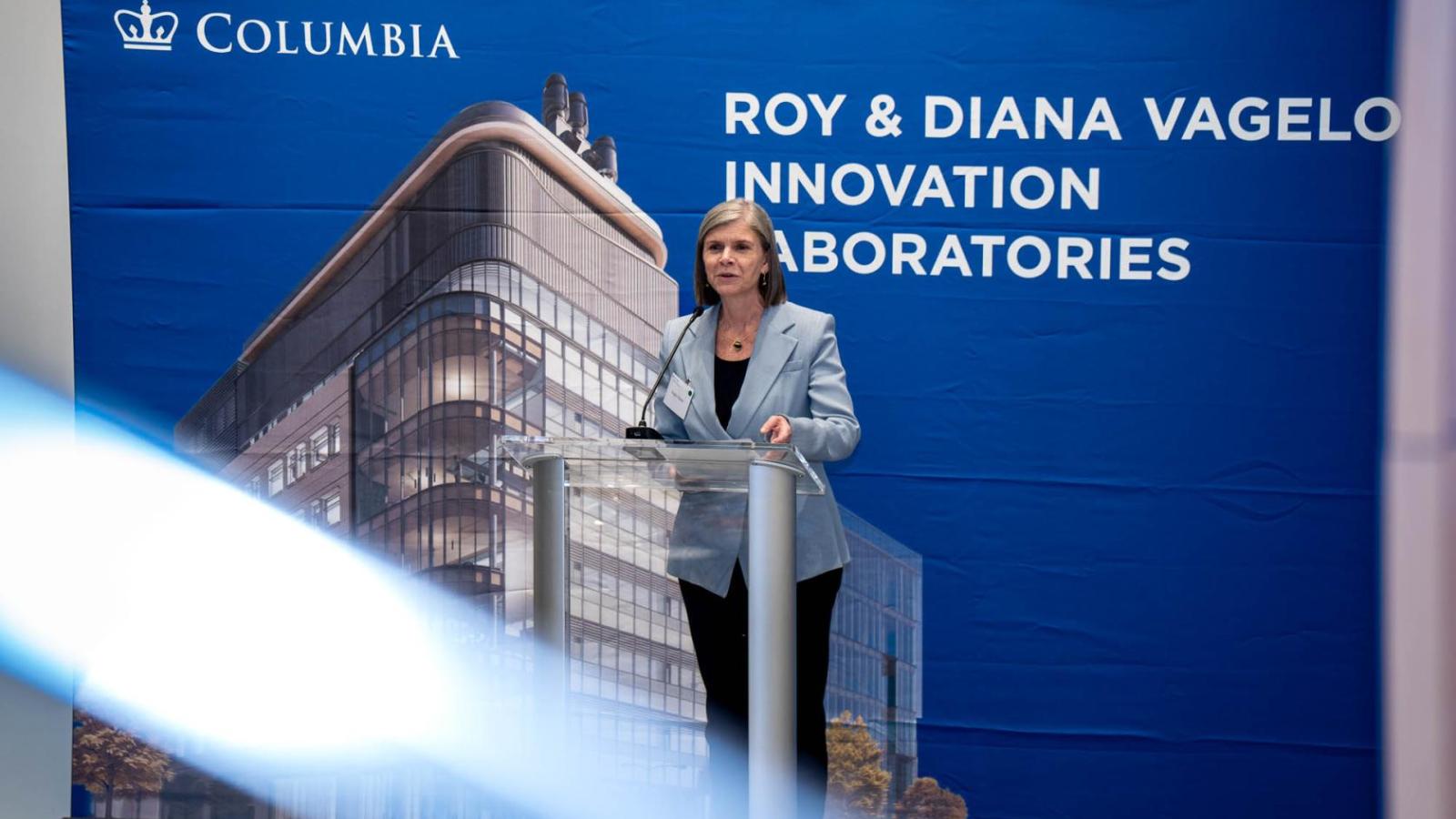
Angela V. Olinto, provost of Columbia University and the Rutherfurd Professor of Astronomy and a professor of physics, and Jeannette M. Wing, executive vice president for research at Columbia University and a professor of computer science, also addressed the gathering. They echoed McKiernan’s comments around what the new laboratories will mean for current and future scientists and for patients around the world.

“This beautiful facility is very much a part of the City of New York as well as a part of the neighborhood," said Angela V. Olinto, provost of Columbia University. "And these visiting students from a school nearby will become the next generation of doctors, psychologists, veterinarians, and physicists (my field).” All photos of the celebration event by Rudy Diaz for Columbia University Irving Medical Center.

“Columbia researchers are testing ways to block the formation of mutant proteins that cause ALS and are designing a shot in the arm that could help the heart repair itself," Jeannette M. Wing told attendees at the event. "I love to brag about Columbia research, but I also want to inspire these high school students. This exciting work could be done by you!”
Then, Hana Kassem, principal at the architecture firm KPF, spoke. “When we started this project, [we were] asked, ‘We're going to build a pioneering all-electric research building, but how will people, both inside it and out on the street, know that we've done something special?’” she said.
“That’s why the ground floor is transparent. It's why we put the community health forum right here on the most visible corner of the building. This is the space where scientists will give talks, run workshops, share what they're working on with the people, community, and students who live outside these walls.”
Kassem highlighted additional features, including efficient and flexible labs, collaboration corners, green walls, and a planted roof. “We hope the researchers who work here find the inspiration to push their science further to accomplish what they came here to accomplish, in a building that never turns its back on the community or the neighborhood around it, as that is a true landmark institution.”
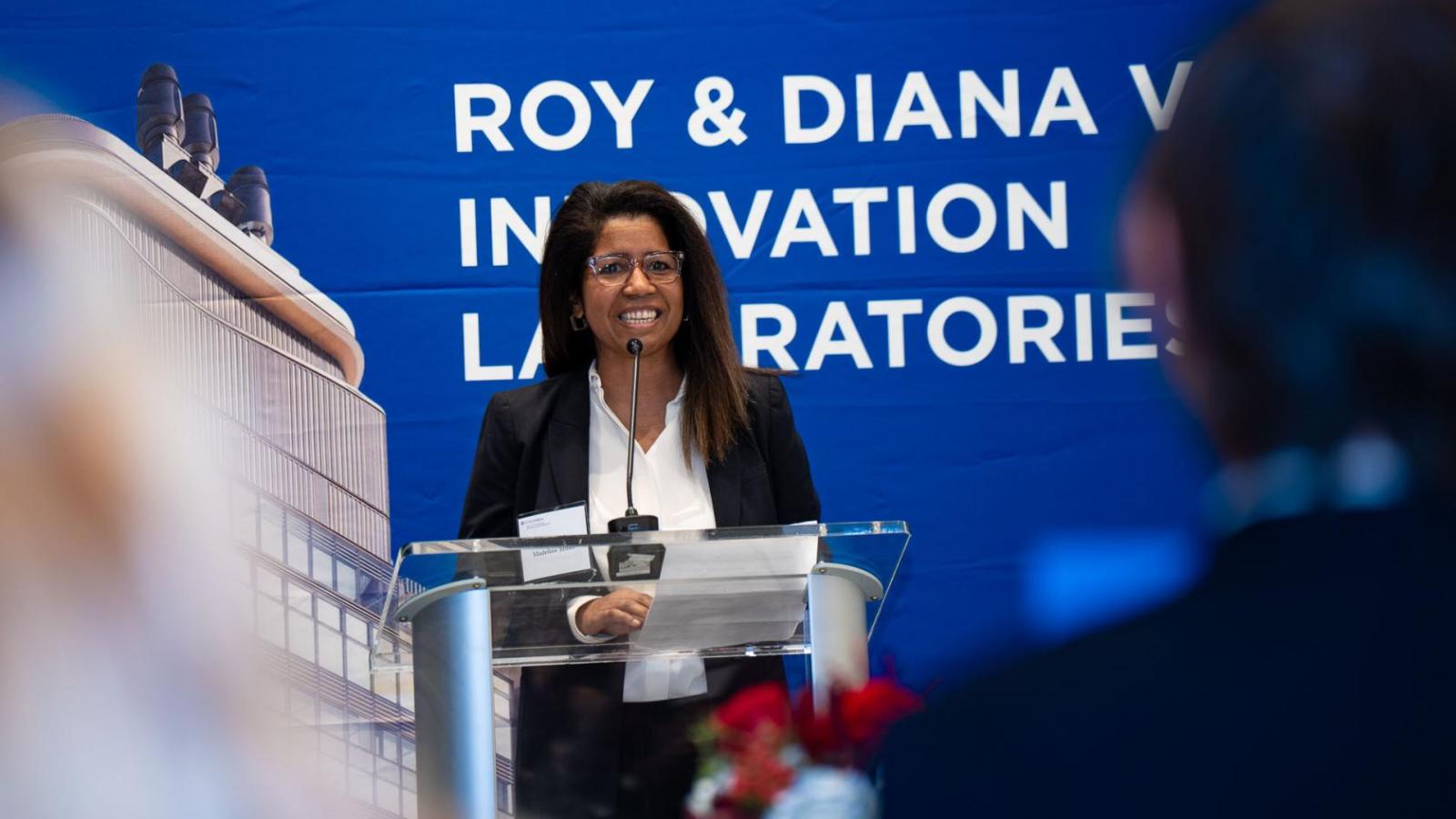
Construction of the 85,000-square-foot Vagelos Innovations Labs began in September 2024 and was completed on time, said Madeline Julian, assistant vice president for capital project management at CUIMC. She applauded the efforts of the extended project team and the internal CUIMC partners who were instrumental in the building’s construction.
Switching to Spanish, Julian then addressed the visiting students: “When I was a teenager, remember walking around this neighborhood, never imagining that one day I would be leading the construction of a building that will continue the mission of medical discovery. Now, you are the future! As you tour the building this evening, ask a lot of questions. I hope you see or hear something that sparks a little curiosity in you.”
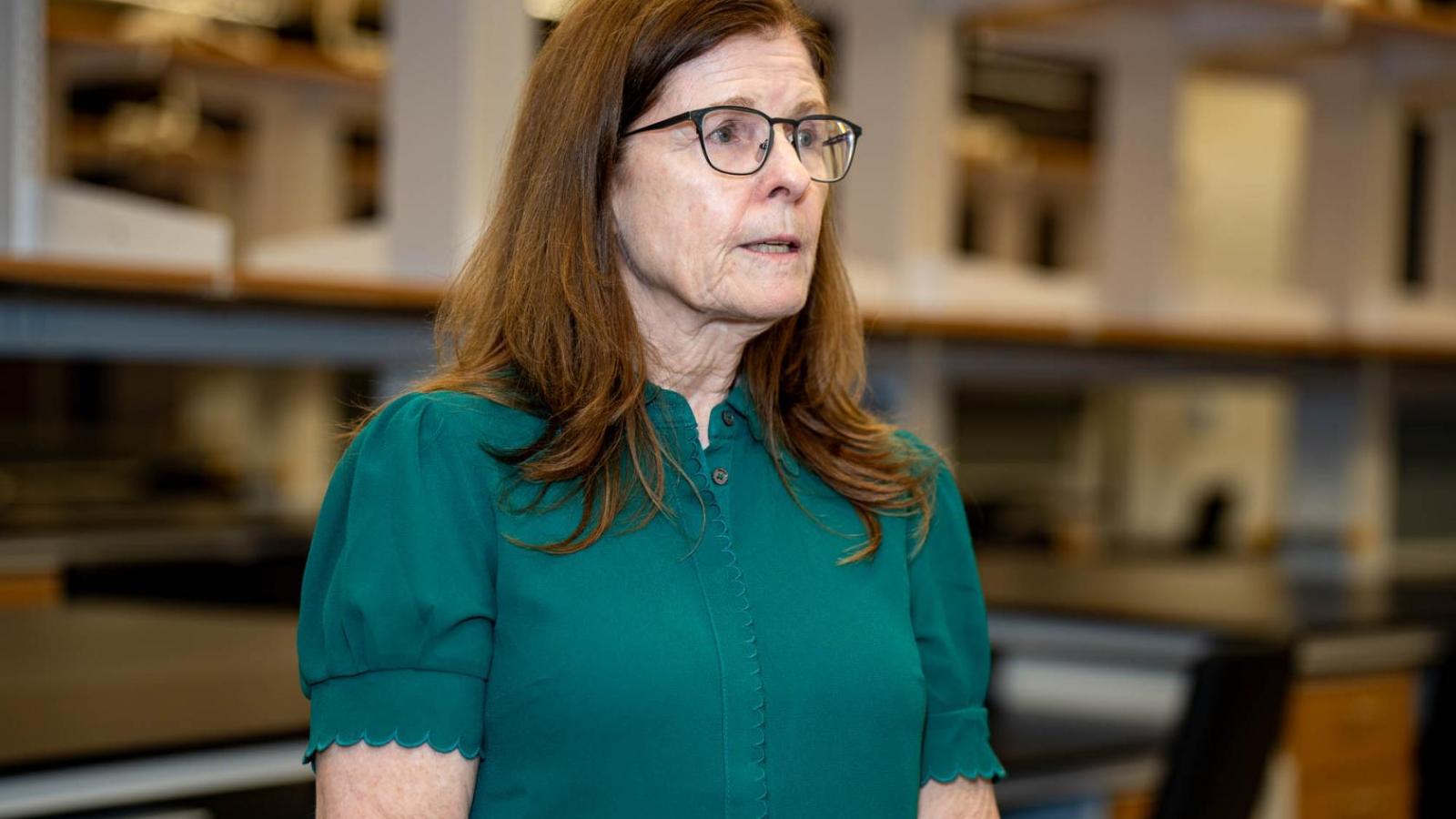
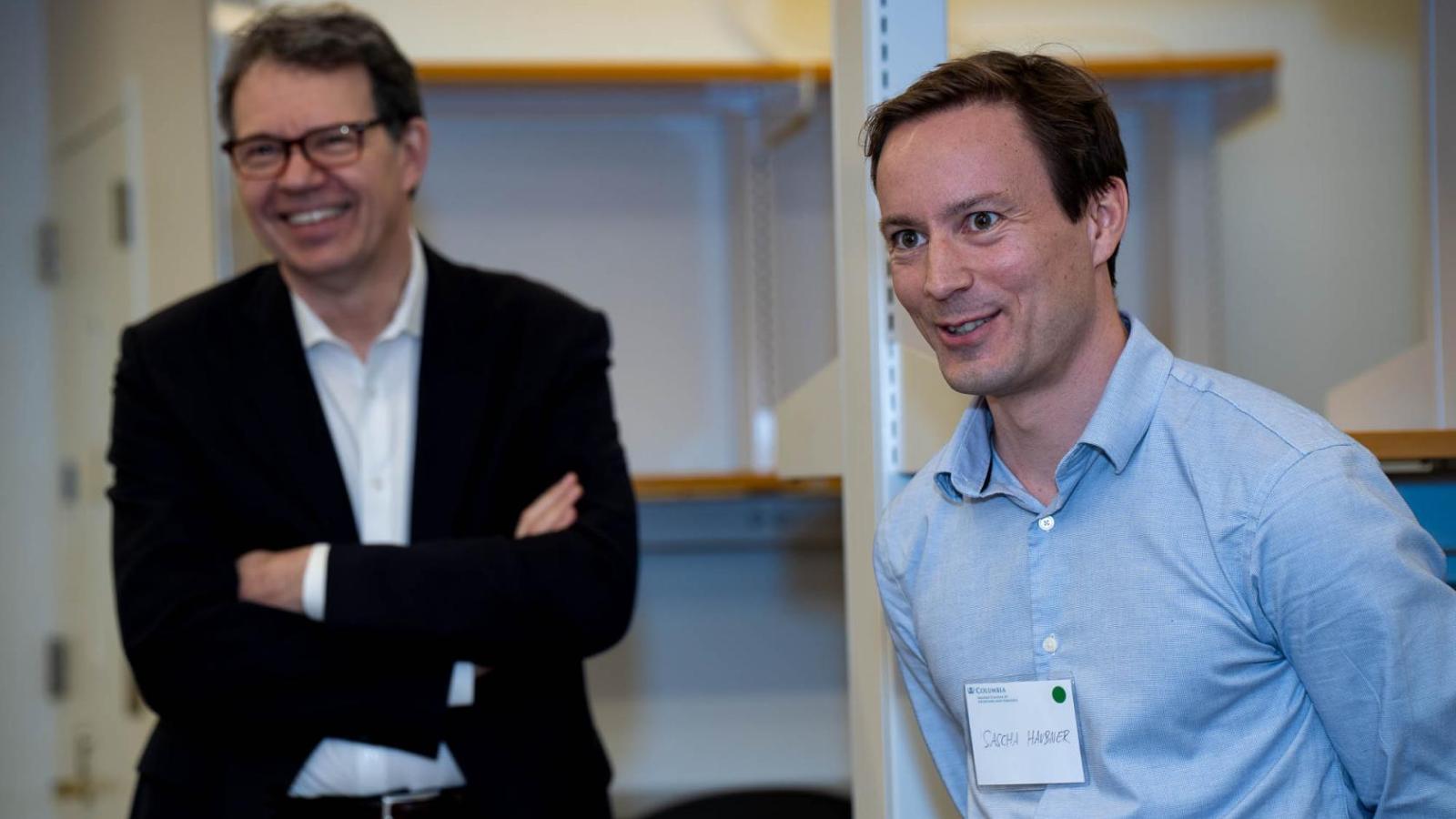
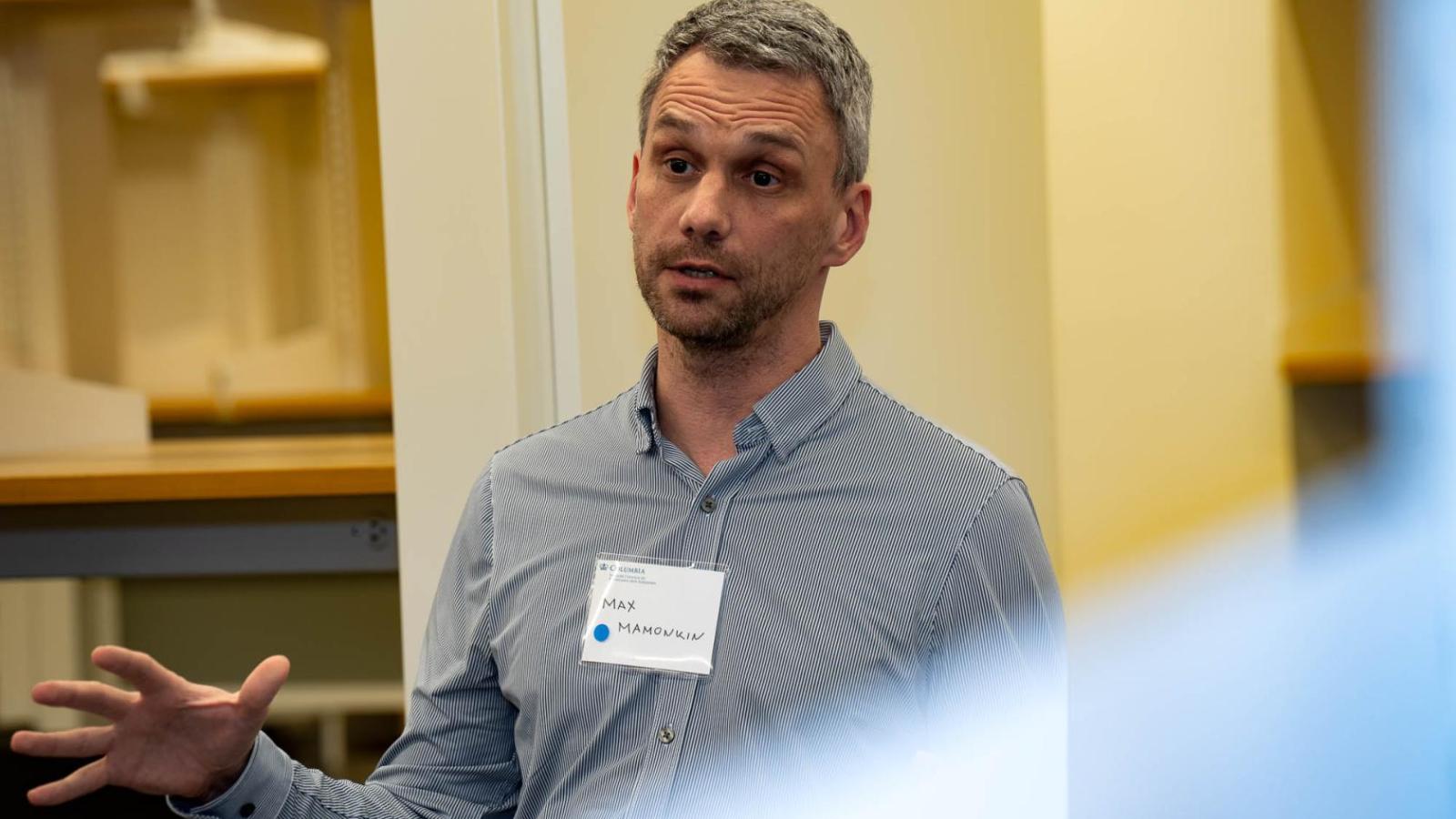
Guided tours, which followed the speaker program, introduced guests to two of the principal investigators who will occupy the building: Michel Sadelain, the Herbert and Florence Irving Professor of Medicine and the director of the Columbia Institute for Cell Engineering and Therapy (CICET); and Carol Troy, professor of pathology and cell biology and neurology in the Taub Institute for Research on Alzheimer’s Disease and the Aging Brain.
Rafael Vargas, assistant principal at the Gregorio Luperon High School, who accompanied the visiting students, was impressed by the proceedings. “I believe the evening was meaningful for my students. The opportunity to visit the laboratories, tour the facilities, and learn about the work that will take place there gave them an appreciation for research and science. The visit, the stories, and the conversations with the researchers will inspire our students to pursue a path in medicine and research.”